Did you know that just a few large leaves or as little as 10 pine needles can be enough to block water from flowing through your gutters? Clogged gutters can lead to pooling water, flooding in your yard, and even cracking foundations. That’s why it’s extremely important to ensure that runoff water and snowmelt moves easily throughout your home’s entire guttering system.
So how often should you have your gutters cleaned?
If you’re concerned about debris clogging up your gutters, then you may want to consider a system of gutter protectors. These are usually gutter covers of some sort that are designed to keep out leaves and needles while allowing water to freely drain into the gutters.
If you’ve already started looking for gutter protectors, you’re probably well aware that there are various brands and types of gutter protectors to choose from. Here are five questions to ask yourself before purchasing one.
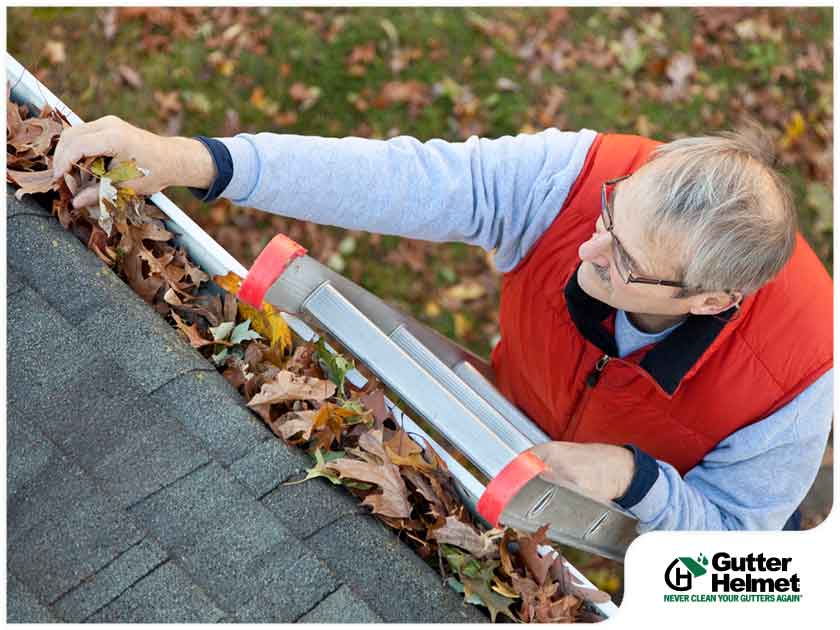
The autumn season is commonly known as “fall” for a reason. That’s because it’s the time when all those beautiful leaves on your stately trees suddenly decide to cascade down onto the surface of your yard. It’s bad enough that you have to spend your time raking, blowing, and gathering leaves throughout the fall. But the fact that many of them get stuck in your gutters and cause rainwater to spill onto the ground is enough to make you yearn for an apartment lifestyle.
How can you get some “leaf relief” for your gutters? Here are four tips:
Ah, yes – “no-clog gutters”: the Holy Grail of home drainage systems. If you could just find those elusive no-clog gutters, then most of your water runoff problems will simply wash away – literally. But is it really possible to have true no-clog gutters on your home?
Image: ghclark.com
Judging by the ads you see on the Internet, no-clog gutters are just a phone call or email away. Many companies and contractors market their products and services with the “no-clog” moniker, and a few even offer some sort of warranty or guarantee. But do they work as well as advertised?
Some of the simplest — yet most wondrous — parts of nature are the leaves that decorate our trees. They augment the beauty of spring and provide vibrant color during the autumn months. Yes, leaves are beautiful … until they fall into our gutters, that is. Then they become troublesome rubbish. ]
Image: gutterworks.com
Everyone wants leafless gutters, but accomplishing that goal can be difficult. Unless you enjoy teetering on a ladder and scraping wet, soggy debris out of your gutters a few times a year, consider one of these seven alternatives for achieving leafless gutters:
There are lots of ways to know if your gutters aren’t doing their job, from the obvious to the subtle. There are some signs we can all catch, even if we’re not the most handy. But what about the more subtle ones? We’ll start with some of the obvious ones and work our way down to the ones that are harder to spot.
Water spilling out of your gutters. This is the most obvious sign that something’s wrong. If you look out the window and a waterfall seems to be coming off your roof, it’s time to look into getting those blocks cleared.
Wally Conway is an expert on homes. He first got involved in home inspections in 1994, and has since inspected an amazing 5,000 houses. He’s also the founder of HomePro (www.GoHomePro.com), which as a company has inspected over 25,000 homes! Recently we had users from our Facebook and Twitter Facebook accounts submit questions to Wally about gutters and home improvement; here are the best.
What are the three most common “unpleasant surprises” that homeowners get during their home inspection?
Gutters seem to be one of the crucial aspects of any home. They make your roof last longer and keep your basement dry. In short, gutters pretty much help your house last longer and with less moisture. But, is gutter always needed?
There are some places that get less than five inches of rain annually, and they’re where you’d expect: the American West. The winner is, unsurprisingly, Death Valley, so named for its total lack of water, of which it receives just 2.3 inches, on average. In contrast, New York City gets about forty inches in a given year, and Los Angeles usually get about twenty to twenty-five inches.
Congratulations! You’ve made it through one of those violent, scary rainstorms with your house still intact. But now that the weather has calmed, it’s time to examine the aftermath.
Certainly, you’ll want to check your fence, clear your yard of debris, and make sure that any vehicles parked outdoors do not require repairs. However, just because you don’t have a fallen tree sticking out of your roof doesn’t mean that your house made it through the maelstrom unscathed. So it’s important to take the time to inspect your house for signs of damage.
You see it all the time in movies: somebody is about to fall off a roof, and they’re stuck clinging for dear life … to a gutter. But how often does this actually happen? Well, at least once, and it saved a life.
A little boy in Henrico, VA, was simply trying to get his mother’s attention. His mom happened to be outside, so the four year old pulled a chair over to the window, stood on it, and started calling to his mother. Unfortunately, he also leaned against the screen…and it gave way, with the boy falling two stories.